



Climate Change Quick Review Tool for Local and State Governments
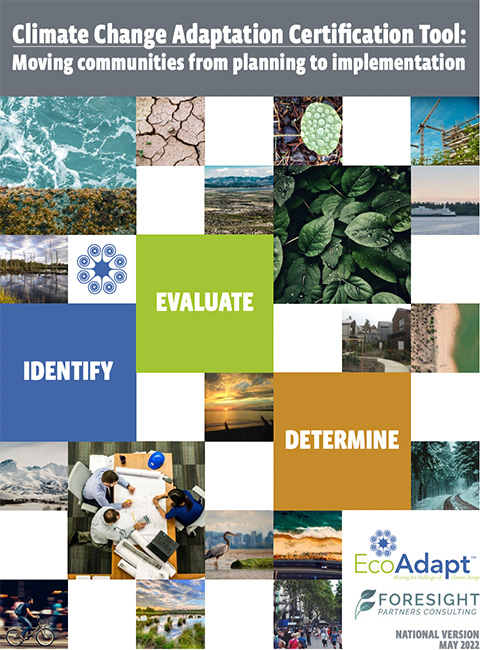
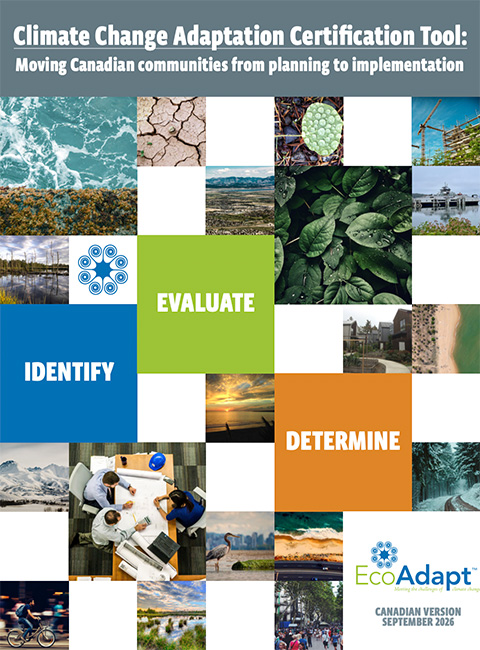
Climate Change Adaptation Certification Tool
Climate change has implications for both the effectiveness and hazard potential of many of the projects undertaken by local and regional governments today. Failing to properly evaluate the potential vulnerability of any project prior to approval can lead to missed opportunities to improve design, optimize siting or avoid risk.
The Climate Change Adaptation Certification Tool (Canadian and U.S. versions available) can be embedded as a regulatory requirements or used for discretionary review to evaluate an idea and inform all parties of expected impacts from a changing climate on a project during its lifecycle. Either way, potential liabilities can be identified prior to permitting or funding, enabling decision makers to make climate savvy, sustainable choices.
Using the Certification will enable services, infrastructure, ecosytems (and thereby local communities) to better anticpate and respond to climate change impacts by protecting public funds from climate risk or future community exposure to risk under altered conditions,
What "Project" Should Use the Certification?
The Certification should be applied to any decision that uses public funds, has a life cycle of greater than five years and can impact public good. This includes, but is not limited to:
- Fiscal Expenditures
- Capital Planning
- Permitting
- Infrastructure Design & Siting
STEP 1: Identify
STEP 1: Identification of Climate Change Risk Factors
Completing this step will identify if climate change impacts could affect a project over its lifetime. Step 1 provides a series of impact indicators that steer a proponent to think about how eight anticipated change factors have the potential to affect a project area. If any indicator is marked as present, then the change factors could be relevant to a project’s long-term success. Therefore, it will have a “Yes” for that factor, requiring Step 2.
STEP 2: Evaluate
STEP 2: Evaluation of Climate Impacts on a Project
If Step 1 detects likely impacts from climate change risks to a project area, then Step 2 asks a project proponent to dive deeper into existing climate data. Narratives, mapping and calculations will be sought to evaluate the project relative to future conditions and assess whether, as proposed, the project will involve (and should therefore avoid) future risk. Results of Step 2 are used by decision makers in Step 3 to inform a determination for the project.
STEP 3: Determine
STEP 3: Determination of Project Review
The CCAC review steps should allow a project to move forward only when it is expected to function sustainably over time; in other words, if it has avoided, minimized or mitigated future negative performance. A project should only proceed when awareness and accountability of risk is accepted. Thereby, a community will not be blindly on the hook for the costs to replace, retrofit, decommission or litigate responsibility for future damage, harm or poor project performance. Step 3 provides evidence that responsible parties are aware of climate change impacts and implication to the project they are either allowing or undertaking.
United States
Canada
Interested in a tool for natural resource management? The Climate Change Adaptation Checklist for Climate Smart Projects may be what you're looking for!
Interested in a custom version for your community? EcoAdapt is happy to help create that. Contact us.